

When we returned home, neither the parents nor the young pigeons remained. The nest stood abandoned. Only little feathers and scattered droppings were left behind, traces of vanished life.
The next day, my friend asked me to drop by. It was then that I learned what had happened.
She had found the pale little pigeon beneath our balcony on the sidewalk, hollowed out by a crow that had waited patiently for its first flight. Feathers had been scattered everywhere — across the pavement, into the street, carried by the wind like fragments of a broken prayer.
My friend wrapped the small body in newspaper and buried it in the forest of Marienhöhe.
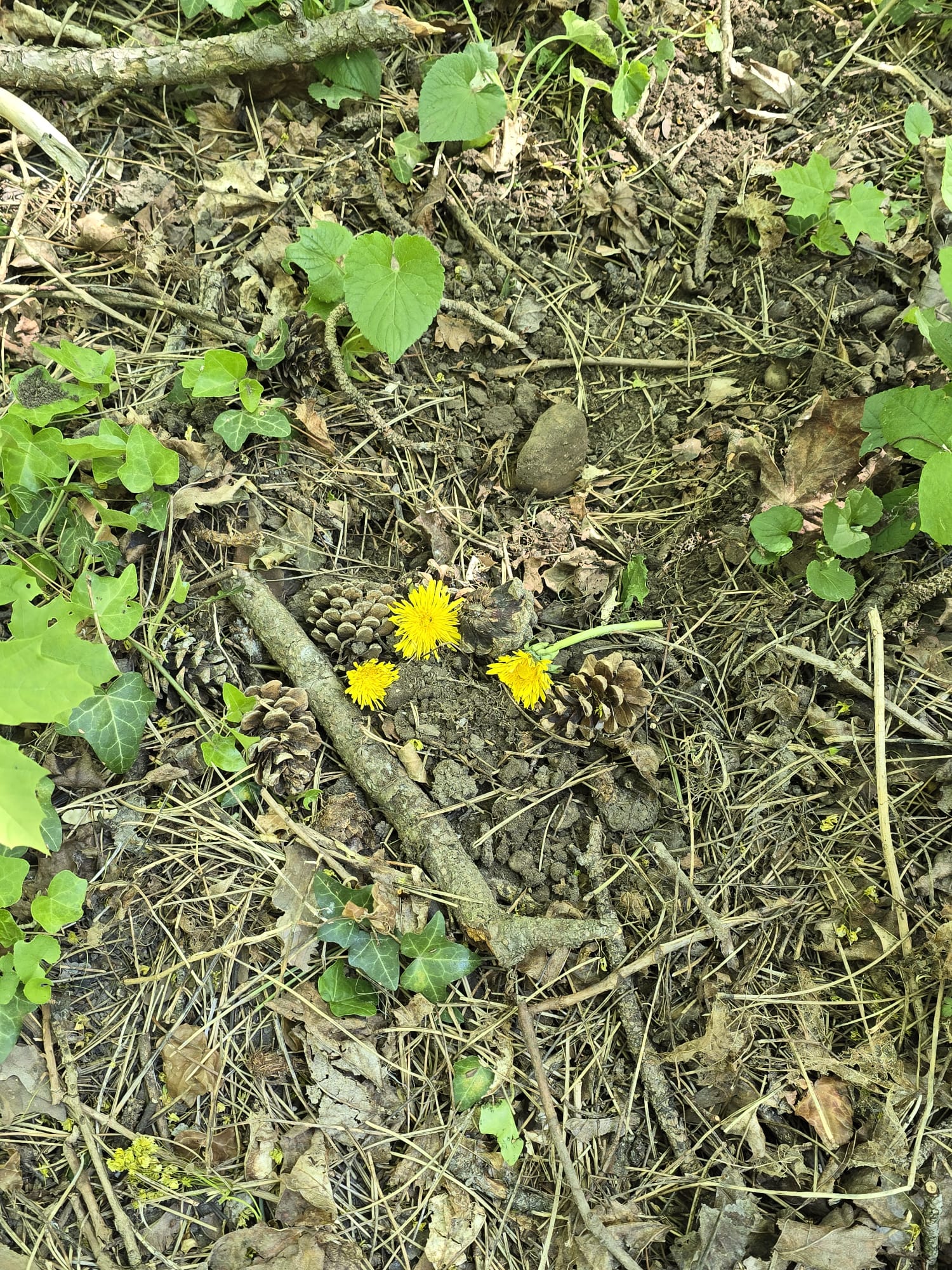
Its death awakened an older memory.
Fourteen years earlier, I had walked the pilgrimage road through France from Vézelay to Saint-Jean-Pied-de-Port. On the final day of that journey, I visited a cemetery in the village of Saint-Jean-le-Vieux. There, lying upon a gravestone, I saw a young dead barn owl covered in white down. Though lifeless, it possessed an unbearable grace.

That same morning, I had copied into my diary the final lines of a poem by Jacques Prévert (To paint the portrait of a bird):
…but if it sings it’s a good sign
A sign you can sign your name
Then very gently you’ll detach
A feather from the bird
And write your name in a corner of the painting.
That night I dreamed a mysterious dream: a dead bird suddenly stirred, rose into the air, and disappeared into the sky.
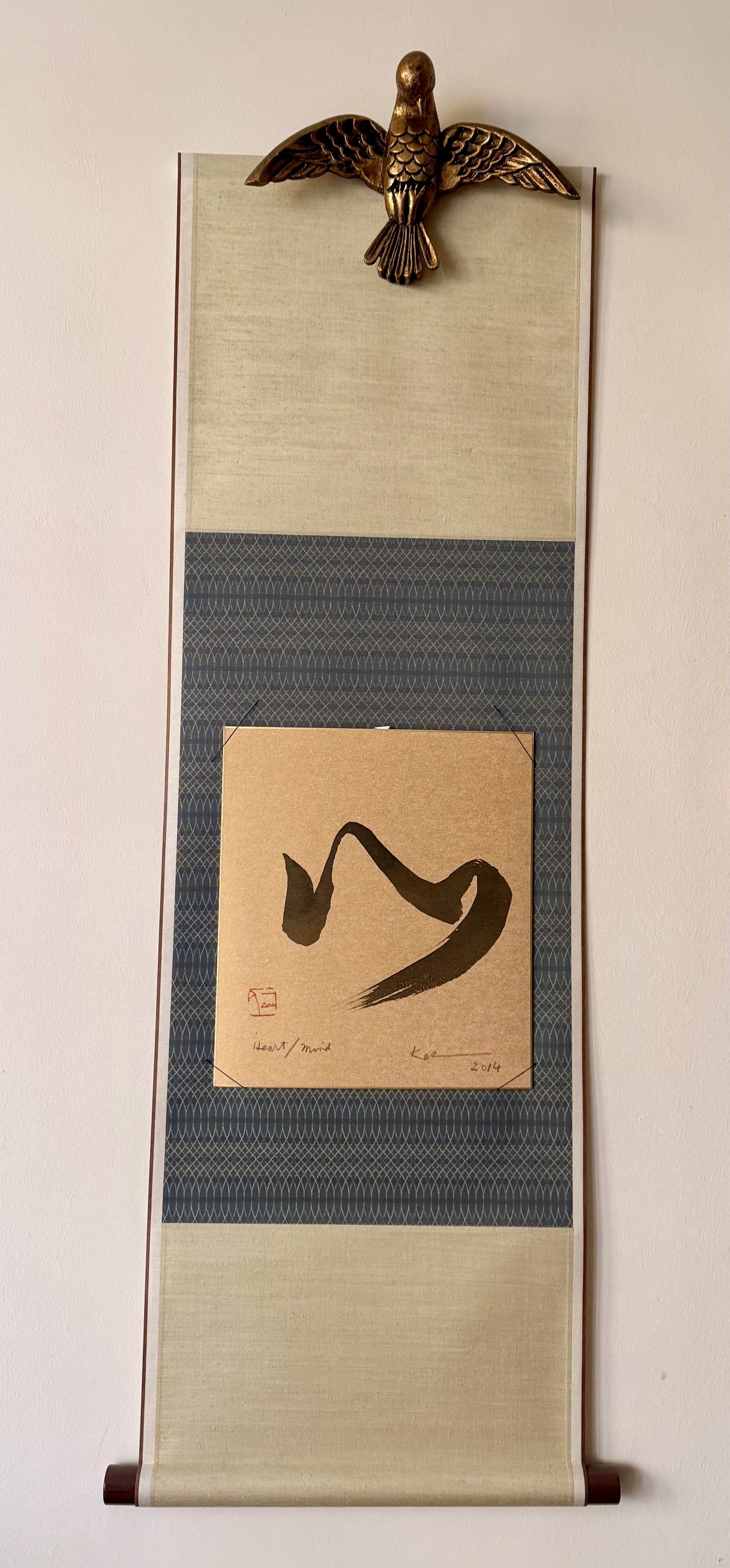
As a keepsake, my friend later brought me a black-gray feather from the little pigeon. I set in within the prongs of a vajra (Tibetan ritual object) upon my altar, beside a white feather from a stork that had rested there for many years.
And sometimes, when morning shadows move across the walls, I still think of first flights — of fragile wings opening toward the unknown, of beauty that survives only because it is mortal, and of the strange faith every living creature must carry before it is daring to rise into the sky.


Beautiful!
Thank you, Eden, for your nice feedback!