
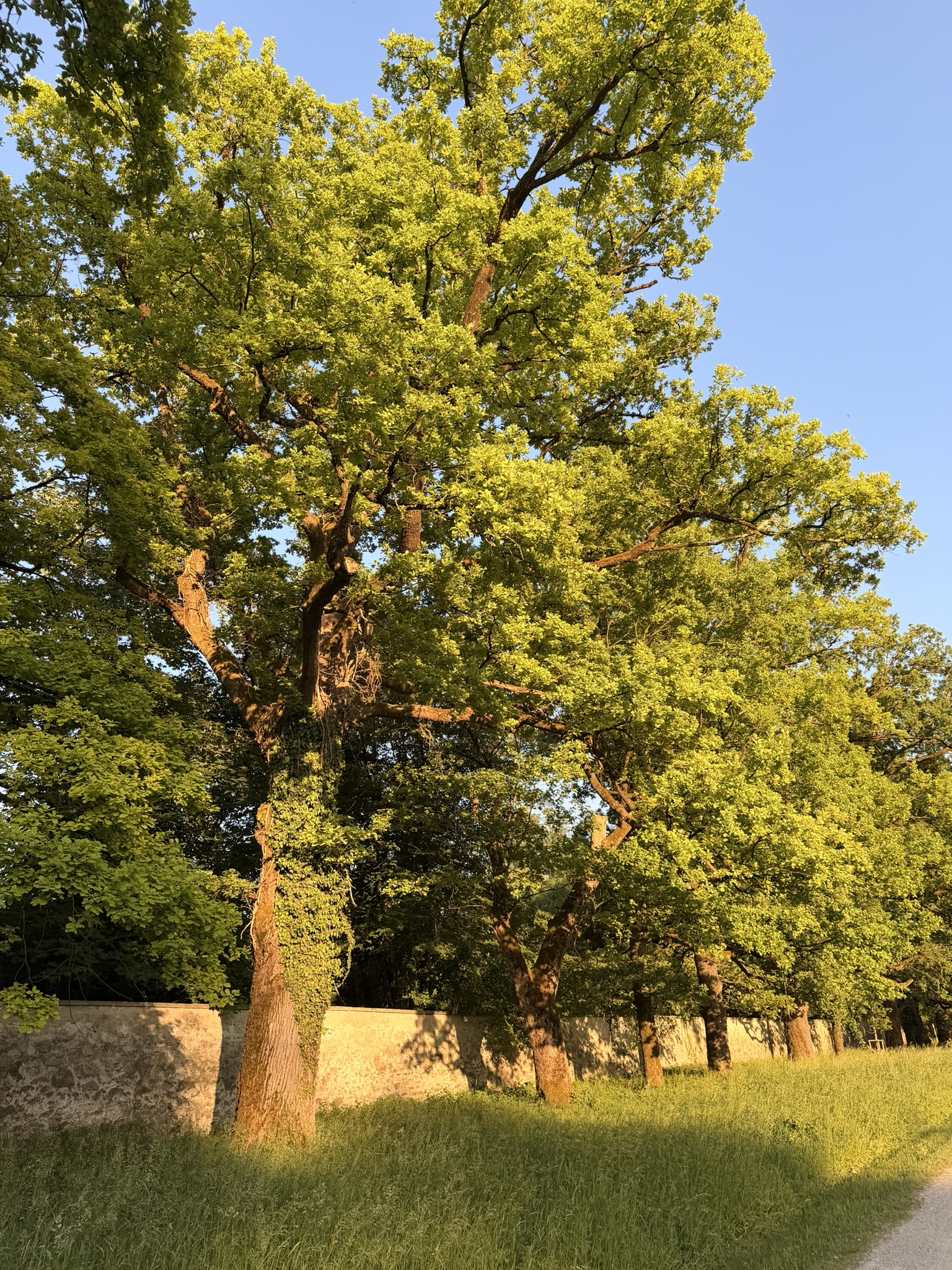
The intoxicating scent of dried hay fills the air. Surrounded by every shade of green, I follow the ancient stone wall of the palace gardens toward Hellbrunn Palace. The day is hot, yet an avenue of venerable, moss-covered oak trees casts a welcome shade.
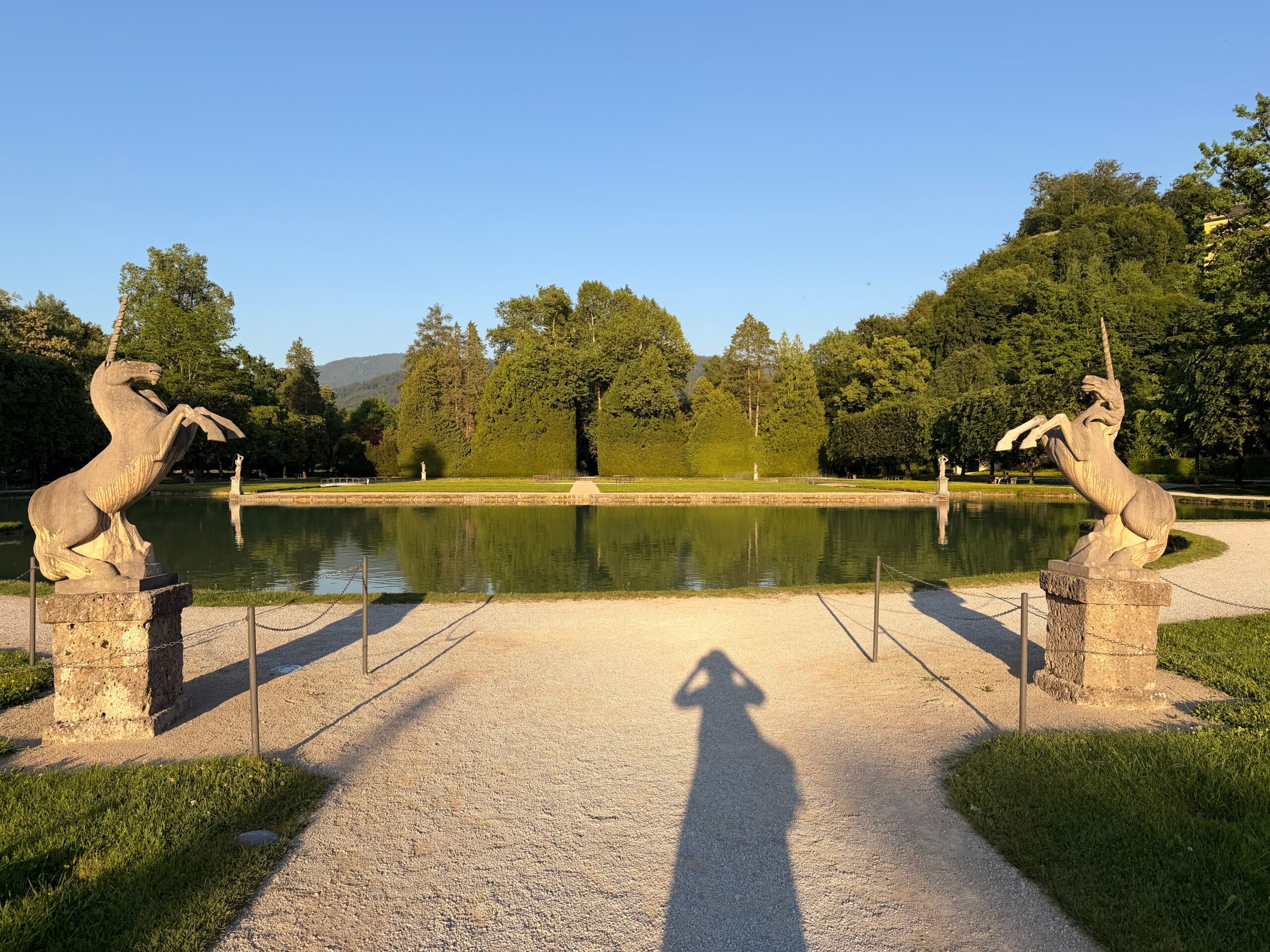
Soon I reach the palace pond. Two stone unicorns beside the water seem frozen in a playful leap, while large fish glide slowly and serenely beneath the surface.
I have visited Hellbrunn before—and yet today I see it with new eyes. Perhaps because the quiet lightness that has long vanished elsewhere still lingers here.
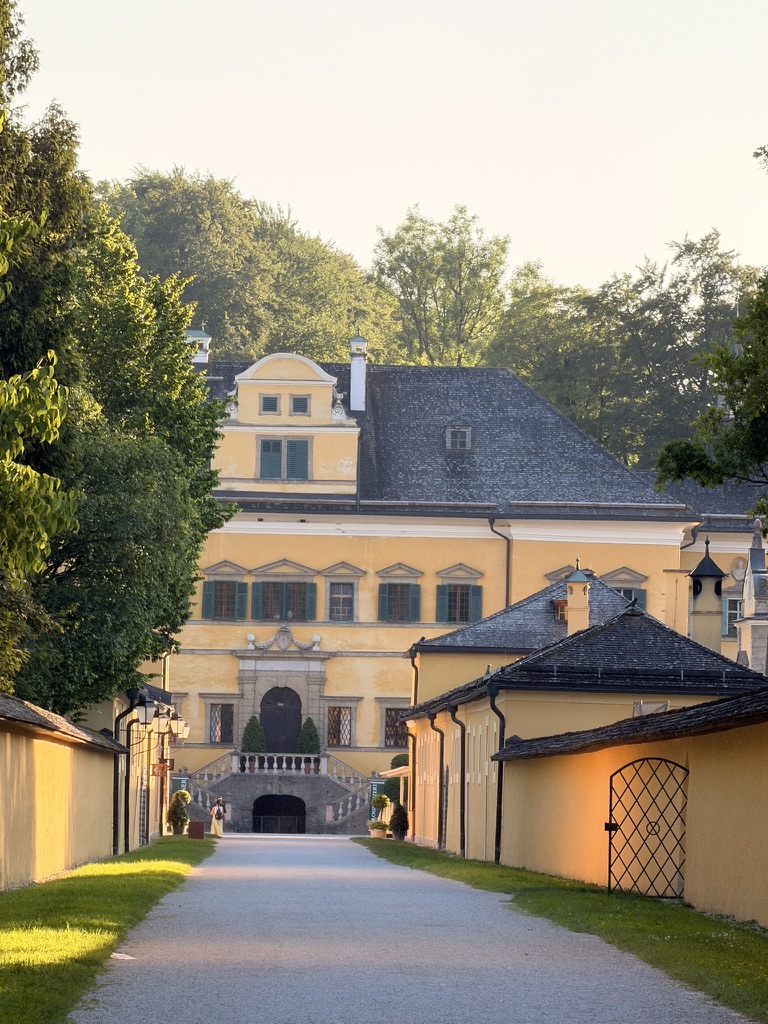
More than four hundred years ago, the palace’s creator, Archbishop Sittikus, sought neither power nor grandeur in this place, but pleasure and amusement. He delighted in surprising his guests with the mysterious, the curious, and the unexpected.
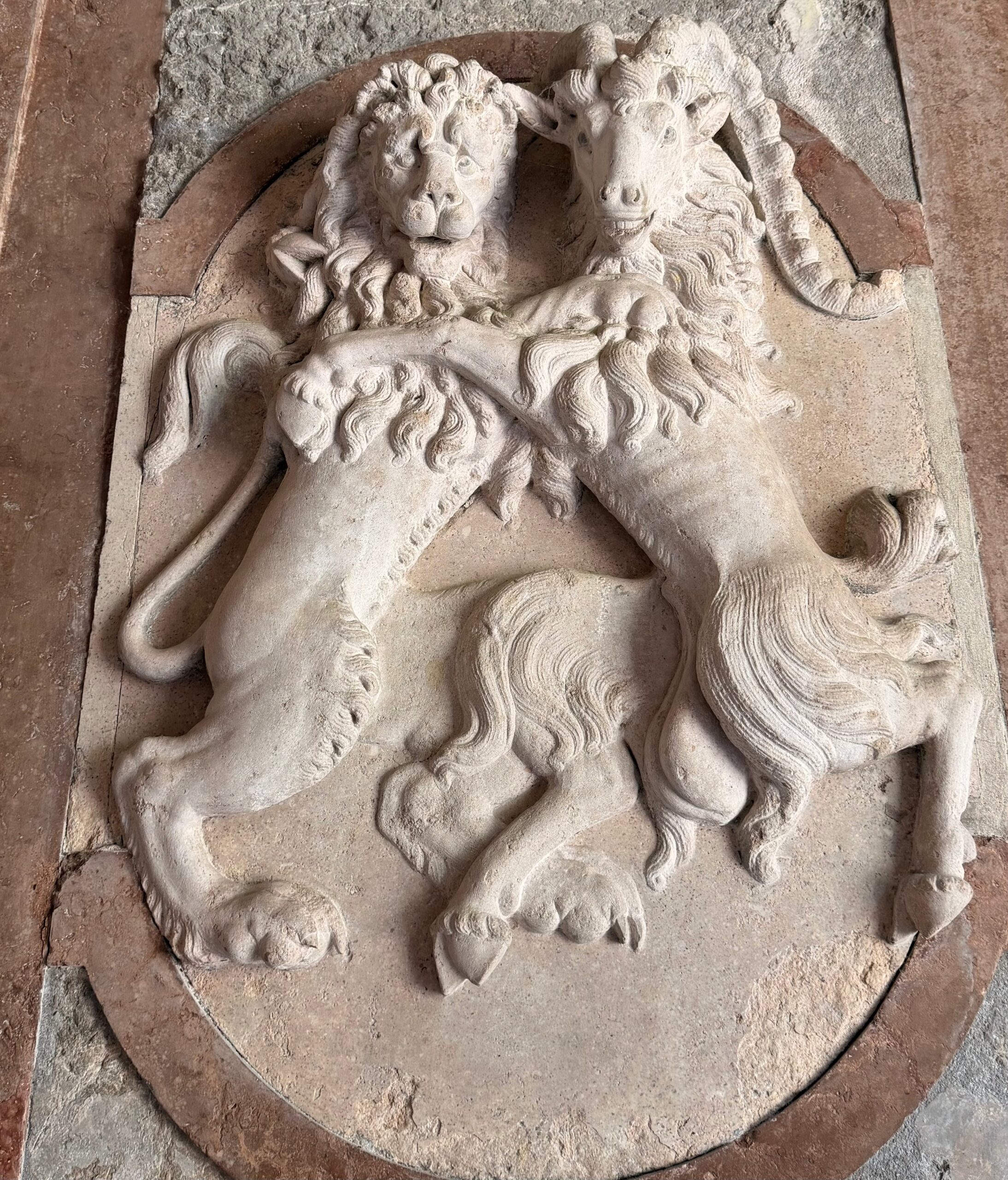
Coat of arm of archbishop Sittikus
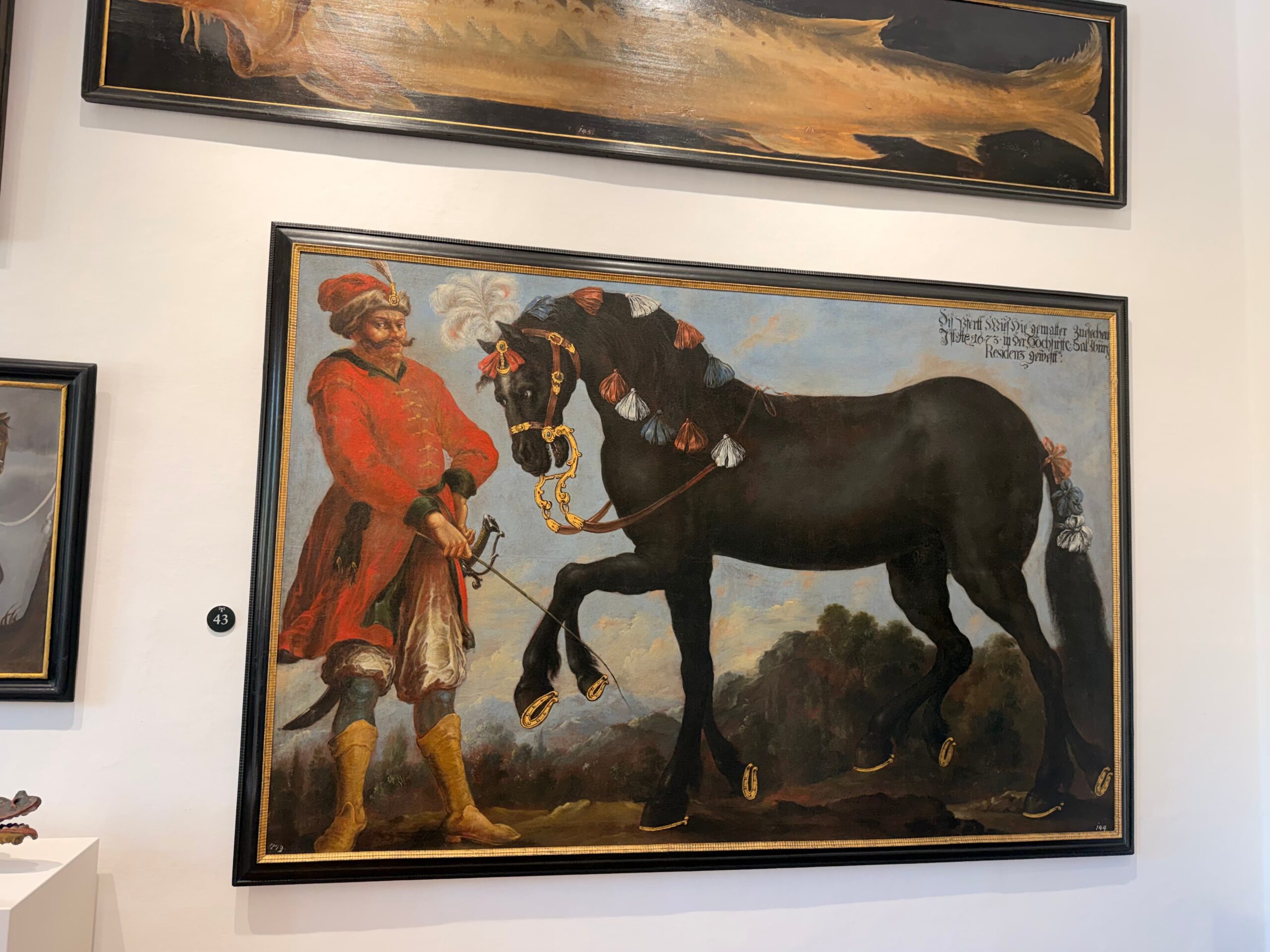
In those days, the marvelous still seemed entirely natural. Paintings from the period tell their own stories of wonder: one depicts an eight-legged horse trotting across the landscape, while another shows a strange creature with the face of a bearded man, a rooster’s comb, the forepaws of a lion, and the hind legs of a bird. Legend claimed that the creature was sighted and even captured in a nearby forest in 1531.
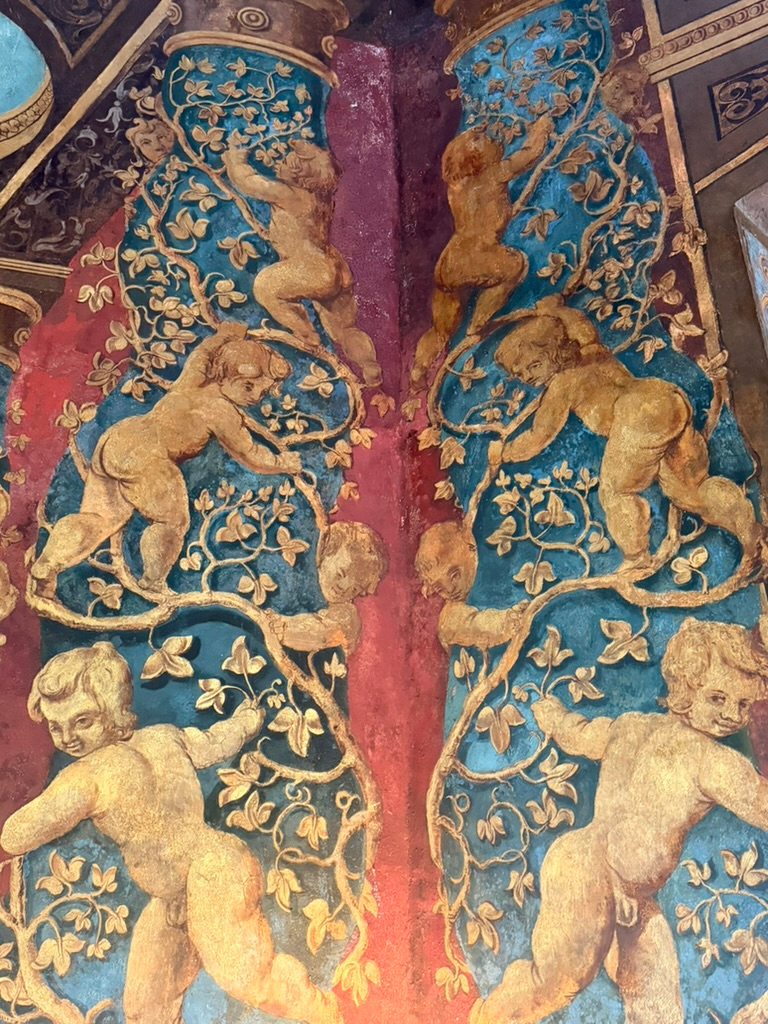
An octagonal chamber once served as a music room. Although Mozart was born more than a century after this pleasure palace was built, it is tempting to imagine that he somehow captured the spirit of this place in his music—its grace, playfulness, and joy.
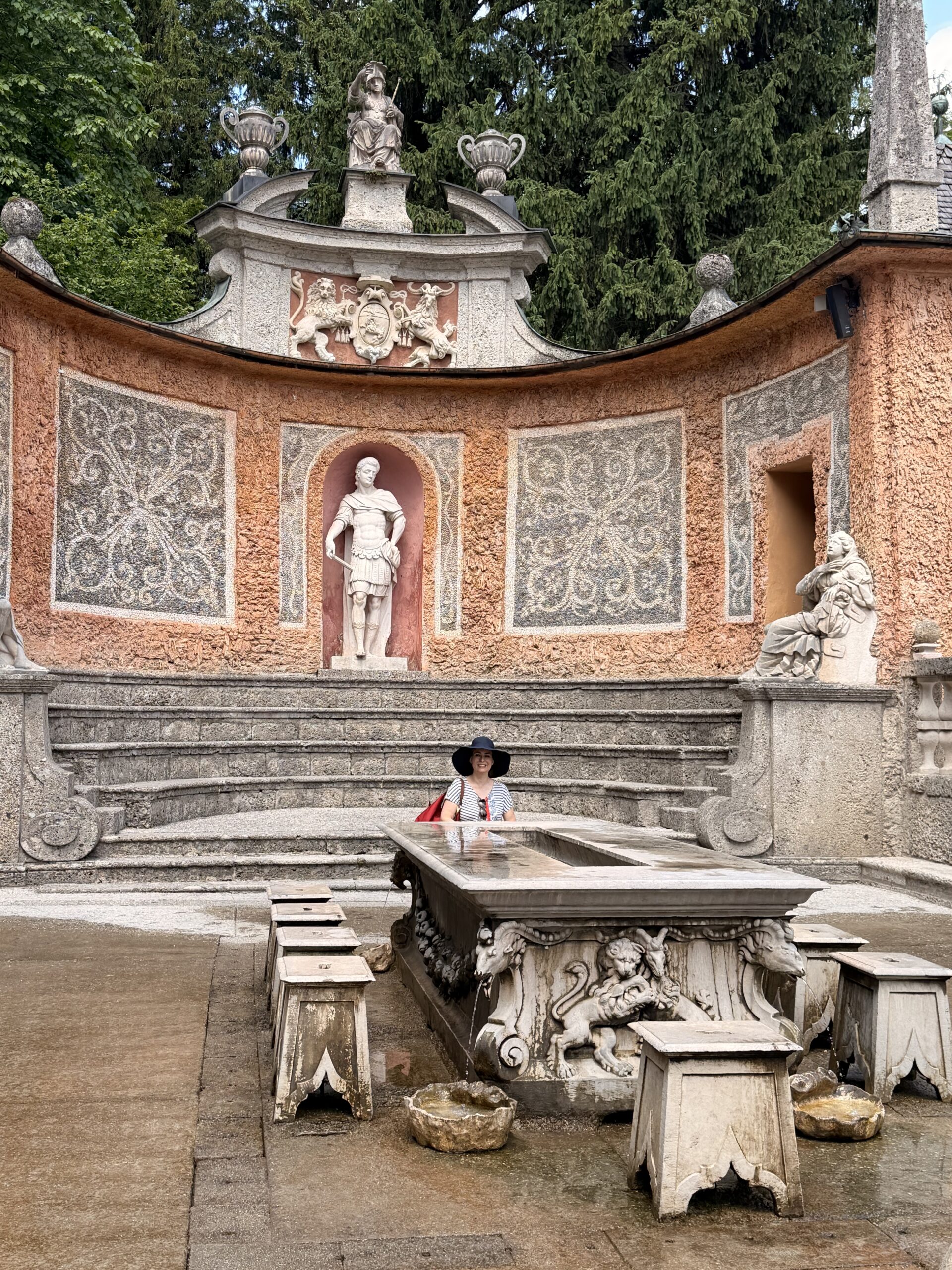
That spirit of playful invention still survives throughout the palace grounds. Like the invited guests of centuries past, I wander with my daughter and two grandchildren through the water gardens in amazement. In one atrium stands the statue of a Roman emperor. Before it rests a stone table where drinks were once cooled. Guests would take their seats on stone stools, unaware that, at the command of the prince-archbishop, jets of water could suddenly shoot up from beneath them. The archbishop himself, naturally, remained perfectly dry.
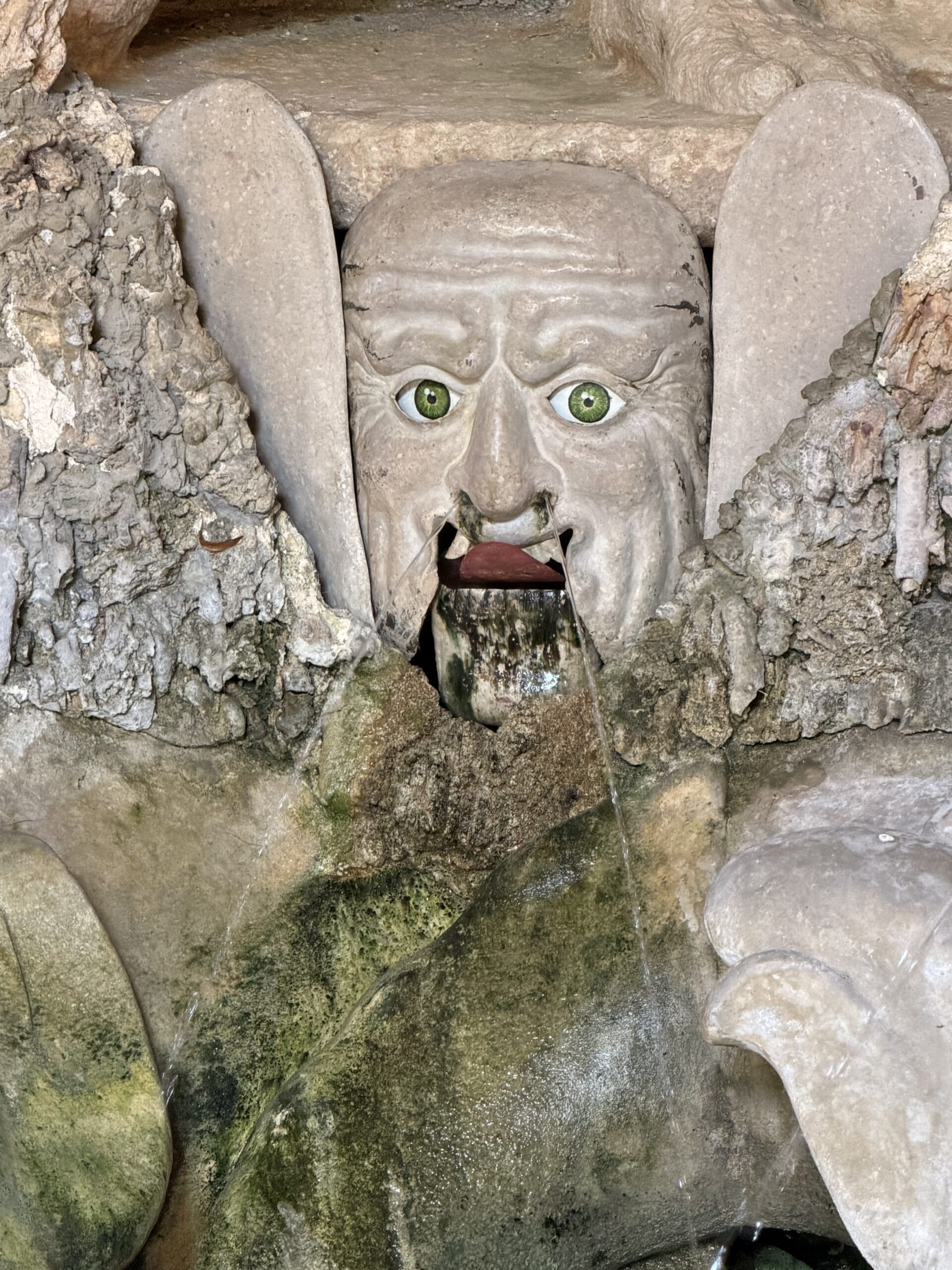
We delight in discovering grottos, fountains, and hidden jets of water that suddenly burst from the ground or emerge from seemingly solid walls. We dash through an arch of shooting water only to be drenched moments later by a hidden spray from another direction. The heat adds to the refreshing fun. At the entrance to one grotto, water streams from the antlers of a stag.
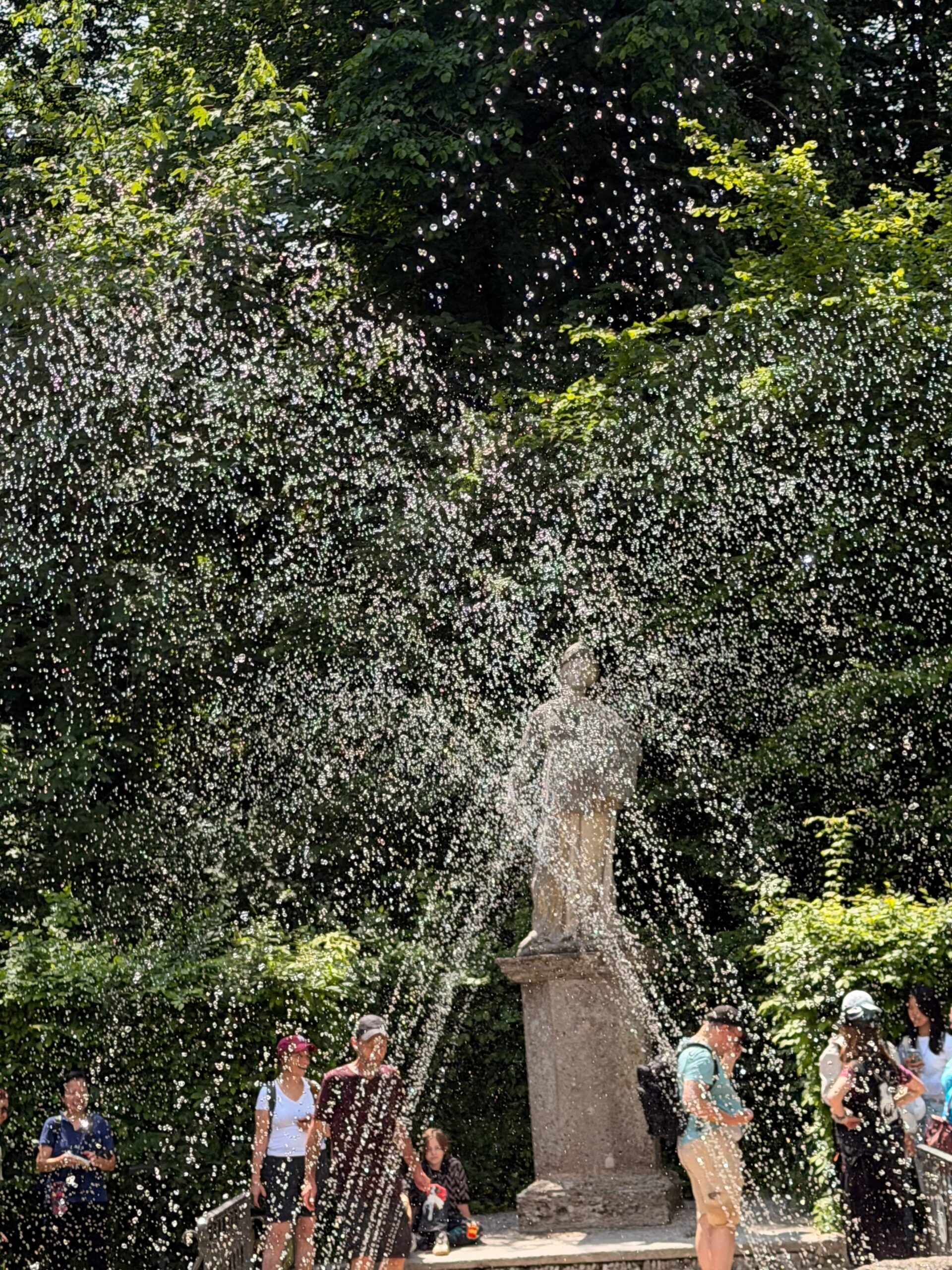
Inside, birdsongs are produced through an ingenious combination of water power and air pressure. It adds another touch of enchantment to a place where wonder still seems perfectly at home.
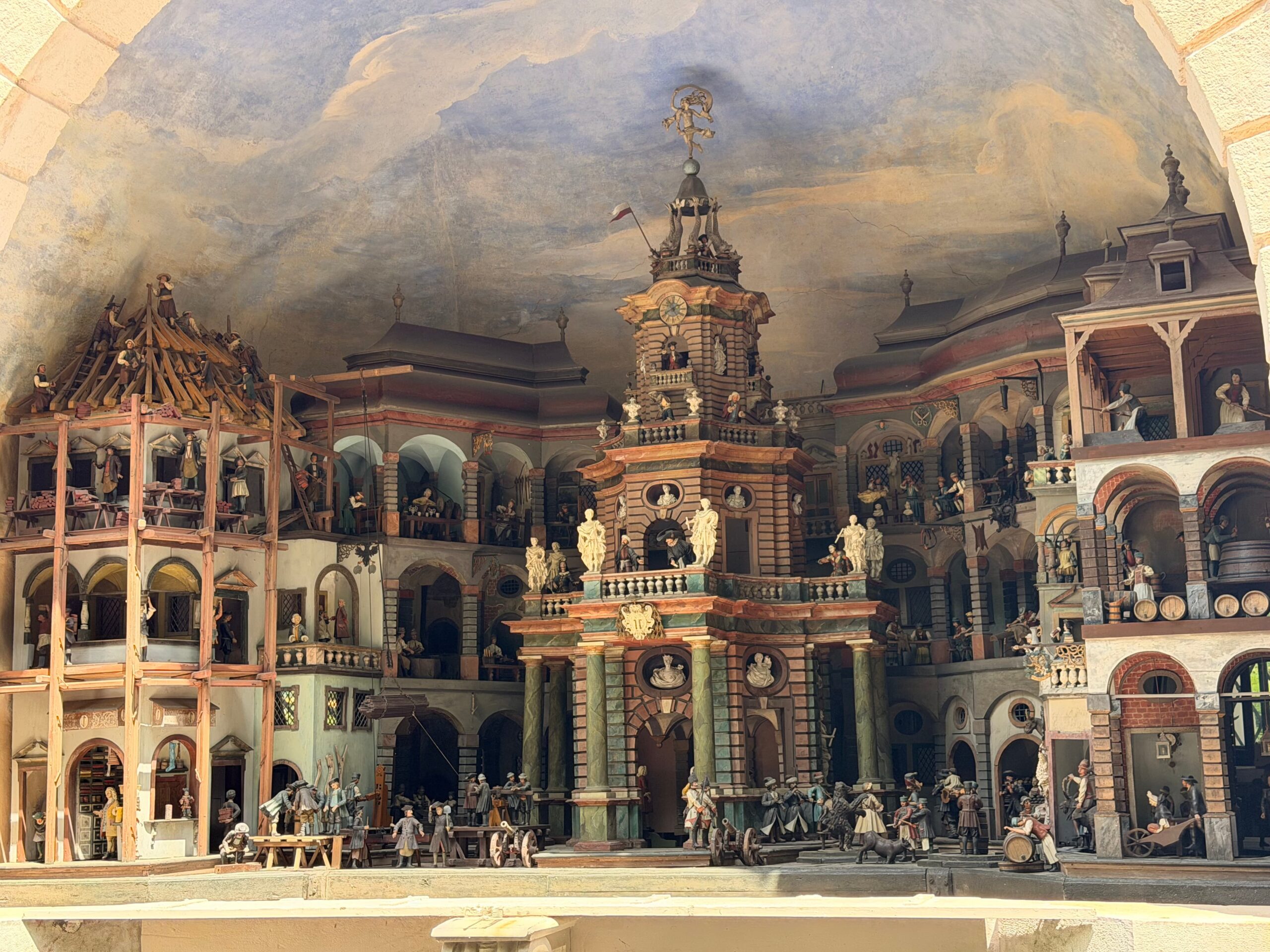
In addition, court life is depicted in a tower like palace by water-driven marionettes.
As water splashes, birds sing from hidden mechanisms, and marionettes dance to the power of flowing streams, Hellbrunn reminds us that delight, curiosity, and wonder are not childish things to outgrow, but treasures worth preserving.